AI Interview Sidekick: Why Real-Time Interview Support Is the New Edge in 2026
The Shift From Static Interview Prep to Live, Role-Specific Guidance
Updated on:

Written by
Tommy Finzi

Lord of the Applications
Helping job seekers automate their way into a new job.
What an AI Interview Sidekick Actually Does
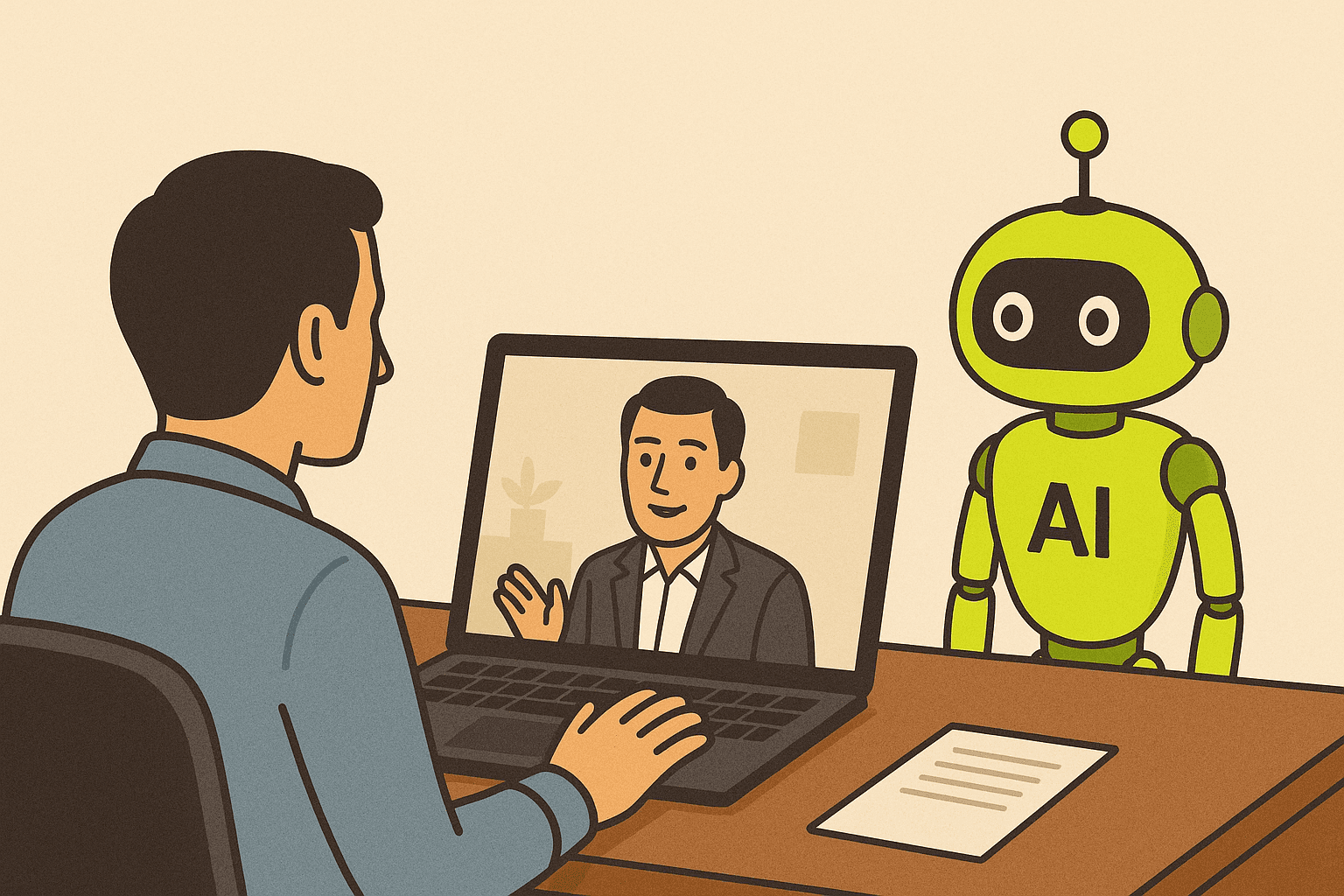
An AI interview sidekick is a real-time interview assistant designed to support candidates during the moments where preparation alone can fail. Traditional interview prep helps before the call. It gives you practice questions, mock answers, frameworks, and feedback. An AI interview sidekick goes one step further by helping during the interview itself.
That distinction matters. In a real interview, candidates are not simply recalling information. They are listening, interpreting, managing nerves, reading tone, selecting examples, staying concise, and adjusting to follow-up questions. Even a well-prepared candidate can blank when a question is phrased unexpectedly. Even a strong candidate can ramble when the pressure rises.
An AI interview sidekick is meant to reduce that pressure. It listens to the flow of the conversation, identifies the question being asked, and provides a suggested direction for the answer. The best version does not replace the candidate. It helps the candidate retrieve the right story, structure the answer, and avoid drifting away from the job requirements.
This is why the keyword “ai interview sidekick” is becoming more important. Candidates are not only searching for interview tips anymore. They are searching for something closer to a live coach, a role-specific prompt engine, and a confidence layer combined into one tool.
Why Candidates Are Looking for AI Interview Sidekicks
Job interviews have become more structured, more competitive, and more psychologically loaded. Many candidates now apply to dozens or hundreds of roles before getting a live conversation. When an interview finally arrives, the stakes feel higher because it may represent one of the few real openings in a long search.
At the same time, employers are using more technology throughout the hiring process. Greenhouse’s 2026 Candidate AI Interview Report shows that candidates are increasingly encountering AI in interviews and want more transparency around how it is used. The Guardian reported similar frustration among UK job seekers, with many describing AI-led interviews as awkward, impersonal, or difficult to navigate.
This creates a strange imbalance. Employers use AI to screen, structure, evaluate, and speed up hiring. Candidates are then expected to perform perfectly inside that system while staying calm, polished, and authentic. It is not surprising that candidates are now looking for AI tools of their own.
The demand is not only about getting “answers.” It is about reducing the feeling of being alone in a high-pressure, high-stakes conversation. Reddit threads around interview copilots and AI interview assistants often show the same emotional pattern: candidates know their field, but they freeze under pressure, forget examples, or struggle to organize their thoughts quickly enough. The pain point is not always knowledge. Often, it is retrieval.
That is where an AI interview sidekick becomes powerful. It does not create talent from nothing. It helps candidates access the experience they already have at the exact moment they need it.
Where Traditional Interview Prep Falls Short
Traditional interview prep still matters. Candidates should research the company, study the job description, prepare examples, practice common questions, and understand what the role requires. AutoApplier’s guide to interview questions and answers is useful for this because it explains the patterns behind common questions rather than treating them as isolated scripts.
The problem is that static preparation assumes the candidate will remember everything under pressure. Real interviews do not work like that. Questions arrive in unpredictable wording. Interviewers interrupt. Follow-ups change direction. A candidate might prepare a perfect answer to “Tell me about a challenge,” then get asked “When did a stakeholder disagree with your recommendation and how did you handle it?” The prepared story may still apply, but the candidate has to reframe it in seconds.
This is where many candidates lose quality. They do not necessarily give a bad answer because they lack experience. They give a weaker answer because they cannot quickly choose the right example, structure it clearly, and connect it back to the role.
Research on interview anxiety supports this. A review published in the International Journal of Selection and Assessment notes that interview anxiety is common and can undermine applicant performance. Career researchers have also pointed out that anxious candidates can receive lower interview scores even when they are capable, because anxiety affects how they communicate.
That is the core weakness of static prep. It improves readiness, but it does not always protect performance. An AI interview sidekick is useful because it lives in the gap between what a candidate knows and what they can access under pressure.
Real-Time Guidance Works Because Interviews Are Cognitive Overload
A job interview looks simple from the outside. Someone asks a question, and someone answers. In reality, the candidate is doing multiple things at once. They have to understand the question, infer what the interviewer is testing, select a relevant example, organize the answer, control pacing, sound natural, and leave space for follow-up.
That is cognitive overload. The more pressure a candidate feels, the harder it becomes to manage all those tasks at once. This is why even strong candidates sometimes answer the wrong question, forget metrics, speak too vaguely, or end an answer without a clear point.
An AI interview sidekick helps by offloading part of that mental work. Instead of forcing the candidate to build the whole answer from scratch in real time, it can suggest the frame. For example, if the interviewer asks about conflict, the sidekick can prompt the candidate toward a real stakeholder-management story. If the interviewer asks about leadership, it can remind the candidate to anchor the answer in ownership, impact, and team outcome. If the interviewer asks a technical or role-specific question, it can help organize the response into a cleaner sequence.
The value is not only in the answer suggestion. The value is in the pause it creates. When a candidate sees a relevant prompt, their brain stops scrambling. They can breathe, choose the right direction, and deliver the answer in their own voice.
This is the difference between memorized answers and live support. Memorized answers break when the question changes. Live support adapts to the question that was actually asked.
Personalization Is What Separates a Sidekick From a Script Generator
The biggest mistake in AI interview support is generic advice. A generic answer may sound smooth, but it rarely sounds convincing. Interviewers do not want a perfect paragraph about teamwork. They want to know what the candidate actually did, what changed, and why it matters for this role.
That is why personalization is the most important feature of an AI interview sidekick. The tool should not only understand interview questions. It should understand the candidate’s resume, the job description, the company context, and the role requirements. Without that context, the support becomes shallow. With that context, it can connect the question to the candidate’s real background.
For example, a product marketing candidate and a software engineer might both be asked about solving a difficult problem. The structure may be similar, but the answer should be completely different. The product marketer might need to discuss positioning, customer insight, launch constraints, or sales enablement. The software engineer might need to discuss debugging, architecture, tradeoffs, or code quality. A useful sidekick should know the difference.
The same applies to seniority. A junior candidate should not answer like a head of department. A manager should not answer like an intern. A career switcher should not pretend to have direct experience they do not have. A good sidekick helps each candidate present the strongest truthful version of their background.
This connects with the broader shift toward skills-based hiring. LinkedIn’s Global Talent Trends highlights rising demand for human skills like problem-solving, adaptability, and collaboration. Those are exactly the skills interviews are trying to surface. A personalized AI interview sidekick helps candidates translate their experience into those signals without flattening their story into generic AI language.
The Authenticity Problem: Using AI Without Sounding Like AI
The biggest risk with an AI interview sidekick is not that the tool gives no answer. It is that the candidate becomes too dependent on the answer. Reading a polished response word for word can make someone sound unnatural, disconnected, or obviously assisted. Interviewers notice when cadence changes, eye contact drops, or an answer becomes too perfect for the person delivering it.
This is why an AI interview sidekick should be used as guidance, not a teleprompter. The best prompts should act like a mental map. They should remind the candidate of the point, the structure, and the example, but the candidate still needs to speak naturally.
Harvard Business Review’s 2026 analysis, AI Has Broken Hiring, argues that generative AI is weakening traditional hiring signals because candidates can manufacture polished resumes and perform convincingly in remote settings. That means authenticity is becoming more valuable, not less. If every candidate can sound polished, the candidate who sounds specific, grounded, and real stands out.
A strong AI interview sidekick should therefore help candidates sound more like themselves, not less. It should pull from real experience. It should encourage concrete examples. It should help reduce rambling. It should not invent claims, fake metrics, or produce answers the candidate cannot defend.
The future of interview support is not “AI says everything for you.” That would make candidates fragile. The better version is “AI helps you stay close to your own best answer.”
Why Employer AI Makes Candidate AI More Normal
There is a reason AI interview sidekick tools are rising now. Hiring itself has become more AI-mediated. Employers use AI for job description writing, resume screening, interview scheduling, candidate matching, assessment design, and sometimes automated interviews. Candidates are responding to a hiring market where technology already shapes who gets seen and how they are evaluated.
Greenhouse’s candidate AI interview research focuses heavily on trust and transparency. Candidates are not always opposed to AI, but they want to know when it is being used, what it evaluates, and whether humans remain involved in important decisions. That is a reasonable expectation. Hiring is too important to feel like a black box.
From the candidate side, AI tools are becoming part of the same reality. Using AI to prepare for an interview is already normal. Using AI to organize examples, practice answers, and understand likely questions is becoming standard. AutoApplier’s guide on AI interview prep already covers that preparation layer.
The controversial part is live support. Some employers may allow it in specific contexts, especially technical environments where AI fluency mirrors real work. Business Insider reported in 2026 that Google was piloting interview formats where software engineering candidates could use AI assistants in certain stages, with interviewers evaluating how candidates prompt, validate, debug, and reason with AI.
That does not mean every employer allows AI assistance in every interview. Candidates should respect the rules of the process. But it does show where the market is heading. AI fluency is no longer separate from work performance in many roles. The real question is not whether AI exists in the interview environment. The real question is how it is used, disclosed, and evaluated.
How to Use an AI Interview Sidekick Before, During, and After the Interview
The best use of an AI interview sidekick starts before the interview. A candidate should upload or connect their resume, study the job description, identify the most likely themes, and prepare the stories they want to tell. The sidekick becomes stronger when the candidate’s profile is accurate and the role context is clear.
Before the interview, it can help map experience to the role. If the job description emphasizes stakeholder management, the candidate should know which project proves that skill. If the job requires analytical thinking, the candidate should prepare a data-driven example. If the role mentions leadership, the candidate should be ready with a story about ownership, conflict, or decision-making.
During the interview, the sidekick should be used lightly. The candidate should listen first, then use the prompt as a guide. The answer still needs to be spoken in a natural voice. The goal is not to read. The goal is to stay structured, relevant, and calm.
After the interview, the same tool can help with reflection. The candidate can review which questions were difficult, which stories worked, and what gaps appeared. This creates a feedback loop. Each interview becomes better preparation for the next one.
This is especially useful for multi-stage hiring processes. A first-round recruiter call tests motivation and fit. A second-round hiring manager interview tests competence. A final round tests judgment, risk, and team alignment. AutoApplier’s guide to final interview questions explains how later rounds often become more psychological and strategic. An AI interview sidekick should help candidates adapt to each stage rather than repeating the same answers every time.
What a Good AI Interview Sidekick Should Not Do
A good AI interview sidekick should not turn the candidate into a passive reader. If the tool encourages word-for-word answers, it may create short-term confidence but long-term risk. The candidate becomes dependent on the prompt and loses the ability to respond naturally to follow-up questions.
It should also not invent experience. This is one of the clearest red lines. If a candidate has never managed a budget, the tool should not suggest that they did. If a candidate has never used a specific software tool, the answer should not imply expert-level experience. AI can help frame transferable skills, but it should not fabricate evidence.
A good sidekick should not make every answer sound the same either. One of the easiest ways to spot weak AI usage is the repeated rhythm of generic corporate language. “I leveraged cross-functional collaboration to drive measurable outcomes” may sound polished, but it tells the interviewer almost nothing. Better answers include context, tension, action, and result.
The tool should also avoid over-optimization. Interviews are human conversations. If every answer is too smooth, too complete, and too perfectly aligned with the job description, the candidate may seem less trustworthy. Real people pause, clarify, and sometimes think out loud. That is not a weakness. It can make the conversation feel more credible.
The best AI interview sidekick is invisible in the final answer. The interviewer should hear a clear candidate, not a synthetic script.
The Future of AI Interview Sidekicks
AI interview sidekicks are part of a larger shift in hiring. The old job search was built around documents, applications, and scheduled conversations. The new job search is becoming more dynamic. Candidates use AI to apply, prepare, rehearse, research, and perform. Employers use AI to screen, structure, evaluate, and manage volume. Both sides are trying to regain control in a system that has become faster and noisier.
The next generation of AI interview sidekicks will likely become more personalized, more discreet, and more integrated into the full job-search workflow. They will not only answer questions. They will know which jobs the candidate applied to, which resume version was used, what the company values, which interview stage the candidate has reached, and which examples are strongest for that specific role.
But the winning tools will not be the ones that simply generate the fastest answers. They will be the ones that help candidates communicate truthfully under pressure. As AI makes polished language easier, real evidence becomes more important. Interviewers will keep looking for judgment, adaptability, problem-solving, and authenticity. A sidekick should help those qualities come through, not cover them up.
That is why the phrase “AI interview sidekick” captures the category better than “AI interview answer generator.” A sidekick supports. It does not replace. It helps the candidate stay composed, retrieve the right example, and keep the conversation moving.
In 2026, interview success is no longer just about memorizing questions the night before. It is about building a system around performance. Static prep helps you get ready. A real-time AI interview sidekick helps you stay ready when the pressure actually starts.
Latest posts
Discover other pieces of writing in our blog


Want to apply to 1000+ jobs while watching Netflix?
Join 10,000+ job seekers who automated their way to better opportunities